
Hoi An, a UNESCO-listed heritage town in central Vietnam, is not only beloved for its lantern-lit streets, riverside charm, and rich history but also a culinary gem thanks to the rich blending of cuisine from many countries. In this post, we’ll explore what makes Hoi An cuisine unique, its signature dishes, where to eat, and how you can design your own food tour or cooking class experience.

1. The Culinary Soul of Hoi An
1.1. A Taste of History and Heritage of Hoi An Food
Walking through Hoi An’s ancient streets, you’ll sense the deep interplay between culture and cuisine. For centuries, Hoi An was a major trading port merchants from China, Japan, and beyond landed here, bringing ingredients, methods, and tastes that would shape the local fare. This cultural blending makes Hoi An local food particularly interesting: you taste Vietnam, but also echoes of cross-sea connections.
1.2. Hoi An Unique Flavors and Local Dishes
What makes Hoi An cuisine unique isn’t just fusion: it’s how the town preserved localized techniques, premium local produce, and community traditions. For example, the renowned Cao Lau noodles are made using water drawn from the old Ba Le Well and lye made from ash of Cham Island wood, a technique few outsiders replicate.
Likewise, classic White Rose dumplings (Bánh Bao Bánh Vạc) are often made by just one family, and their translucent rice wrappers and gentle fillings are recognized as part of Hoi An’s gastronomic identity.

More than a list of dishes, Hoi An cuisine is the heart and soul of a traveler’s experience here. Every meal is an encounter with history, community, and flavor. As more tourists arrive, there is also a growing emphasis on sustainable, local connections: sourcing produce from nearby villages, supporting small vendors, and preserving food traditions rather than chasing mass appeal.

2. Must-Try Local Dishes in Hoi An
Here are 5 signature dishes (and a few honorable mentions) you must taste when you want to experience Hoi An food:
2.1. Cao Lau
The almost-iconic noodle dish of Hoi An. Thick, chewy rice noodles sit in a minimal broth, topped with sliced roast pork, fresh herbs, bean sprouts, and crispy pork cracklings. Its unique texture comes from that special water and charcoal ash treatment.

2.2. White Rose Dumplings
Delicate steamed dumplings with translucent skin filled with shrimp or pork, often topped with fried shallots. The name “white rose” comes from their petal-like shape. Many versions throughout town trace back to the same original family.
2.3. Hoi An Chicken Rice
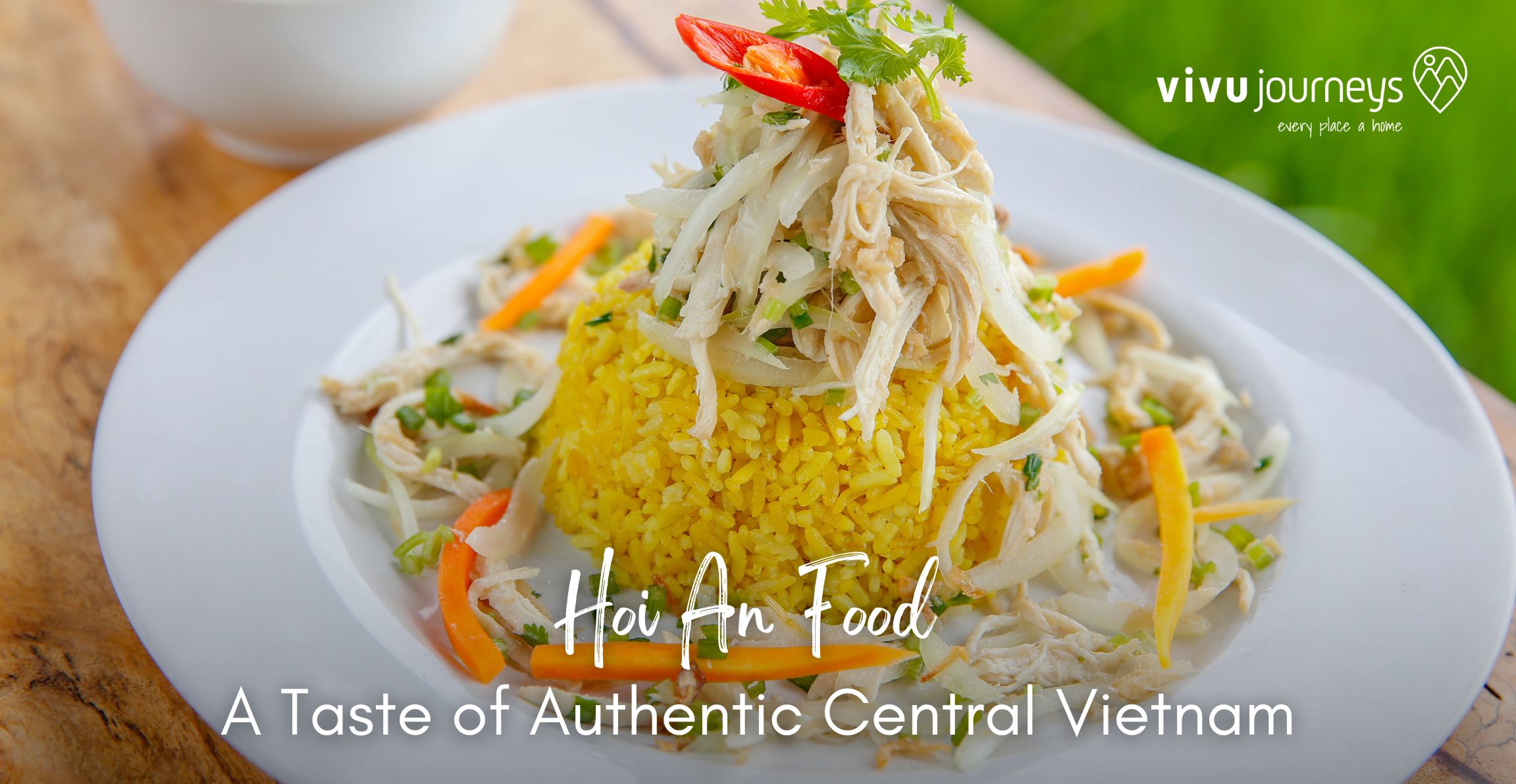
A Hoi An local dishes take on chicken rice: fragrant rice cooked in chicken broth (sometimes tinted by turmeric), shredded poached chicken, fresh herbs, and a light bowl of broth and dipping sauce. Often served with a side salad or pickles.

2.4. Quang Noodle
Though more associated with Quang Nam / Da Nang, Quang noodle is very common in Hoi An food too. It’s a noodle dish with a shallow, richly flavored broth, local meats or seafood, peanuts, herbs, and a splash of chili or lime.

2.5. Local Banh Mi
Hoi An is often dubbed Vietnam’s “banh mi capital” by some sources, for the superior French‐Vietnamese sandwiches you’ll find there. Crisp baguette, pate, pickles, meats and herbs which makes a local favorite and a national icon.

2.6. Hoi An Signature Herbal Tea

Beyond its famous dishes, Hoi An is also known for its Signature Herbal Tea, a soothing blend crafted from local herbs grown in nearby villages such as Tra Que. This traditional tea is infused with ingredients like lemongrass, ginger, pandan leaves, and dried lotus petals, each chosen not only for flavor but also for balance and wellbeing.
Other dishes to keep an eye out for: Bánh Xèo (Vietnamese pancakes), Bún Thịt Nướng (vermicelli with grilled pork), steamed rice cakes, mung bean cakes, and local seafood specialties. So, what food is Hoi An known for? It’s the unique Cao Lầu, White Rose, and regional dishes like Com Ga and Mi Quang, carried by both fine restaurants and street stalls.

3. Where to Enjoy Authentic Hoi An Food
3.1 Street Food & Markets
For the purest Hoi An street food atmosphere, head to the alleys of Ancient Town, local wet markets (like Hoi An Central Market), or stalls around the old walls and riverside lanes. There, you’ll find vendors selling Banh Mi, Banh Beo, grilled skewers, noodle soup, and small snacks.

3.2 Restaurants & Local Eateries
For those who want to taste Hoi An’s authentic cuisine, Victoria Hoi An Beach Resort & Spa offers the best choice owing to the atmosphere of local classics with Indochine architecture. Set within Victoria Hoi An Beach Resort & Spa, L’Annam Restaurant offers a variety of choices of classic local gourmet.

4. Food Experiences for Travelers
4.1. Cooking Classes & Workshops
Joining a Hoi An cooking class allows you to shop for local ingredients, prepare dishes like Cao Lầu, Bánh Xèo (Vietnamese Pancakes), and more, then sit down to enjoy your creations. Many cooking schools blend cultural storytelling with hands-on lessons.

Learn more: Hoi An Cooking Class Adventure: From Market to Table
4.2. Hoi An Food Tours & Street Food Walks
A Hoi An food tour or food walk is a great way to sample multiple dishes in one evening. Tours typically combine market walks, hidden street stalls, and local restaurants. For example, one tour reviewed included stops at street snacks, Quang Noodle, Com Ga, Banh Mi, Bún Thịt Nướng, and Bánh Xèo over three hours at the night market with multiple choices.
Tours also help you ask the right questions, e.g., the story behind White Rose, or how local ingredients are grown, or how to season your own dishes.

After tasting Hoi An’s flavorful street food, plan your stay with our hoi an travel guide Hoi An Travel Guide: Enjoy Affordable Luxury Experiences
From the lantern-lit streets to the riverside kitchens, Hoi An’s food captures more than just flavor; it contains not only the soul of Central Vietnam but also the history of the land.
Each dish tells a story of heritage and harmony, of cultures meeting and memories being passed down through generations. Ready to experience the flavors of Hoi An Cuisine for yourself?
Partner with us or send a booking enquiry today, and begin your journey to explore the story of culinary in Hoi An.