
The local cuisine has been recognized internationally. Here we look at how Victoria Xieng Thong Palace in Luang Prabang and Victoria Can Tho Resort in Vietnam had their dishes: Mekong Fish Larb and Bánh Xèo as featured in USTOA’s Global Kitchen Cookbook, highlighting both Laotian cuisine and Mekong cuisine.
1. USTOA Recognition of Mekong & Laos Cuisine
The USTOA Global Kitchen Cookbook is a project by the United States Tour Operators Association, created to showcase authentic recipes from destinations around the world. Each edition introduces dishes that reflect the culture and flavors of a country, making it both a cookbook and a cultural guide.

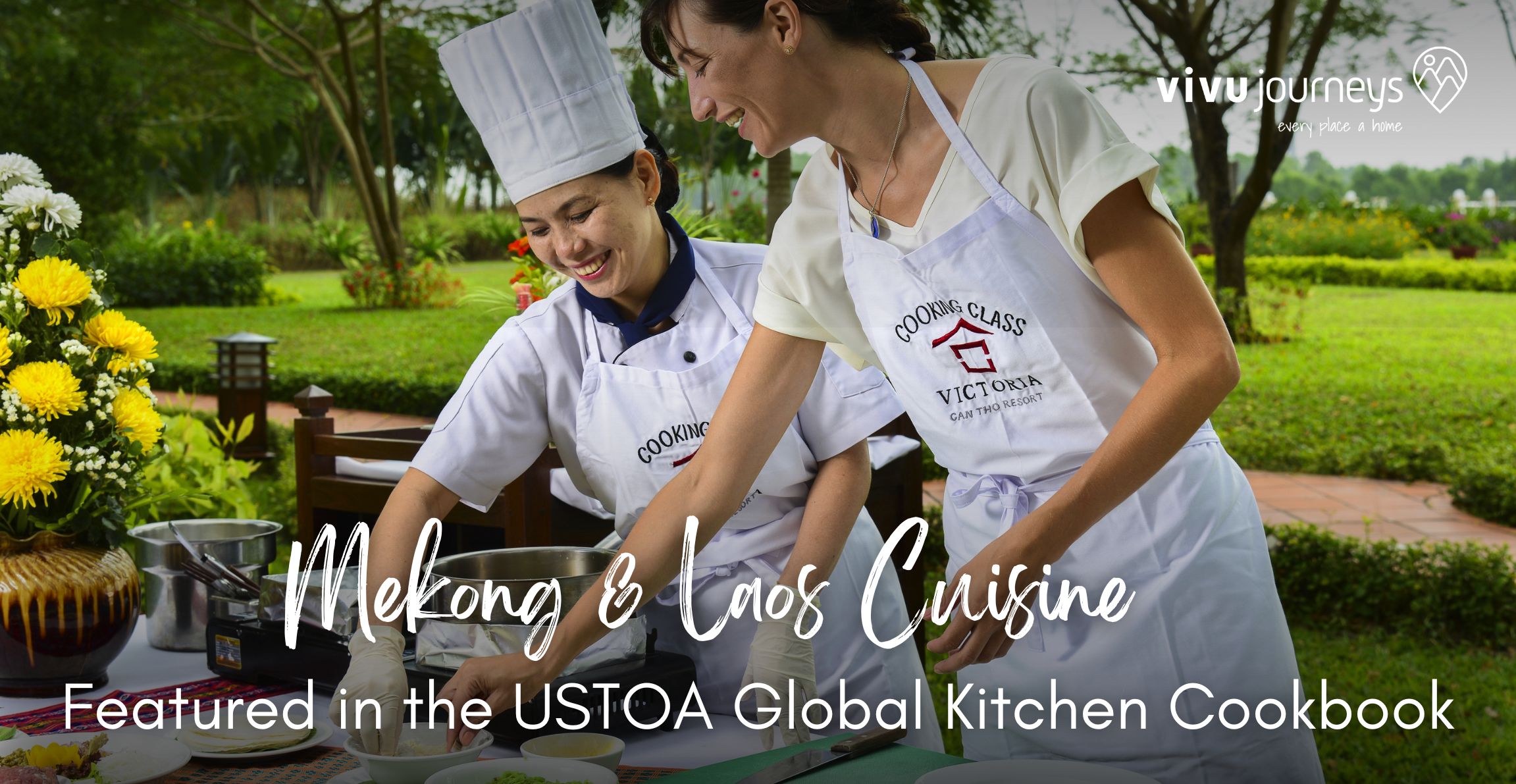
This year, two properties of Victoria Hotels & Resorts were honored to be included. Victoria Xieng Thong Palace in Luang Prabang contributed its recipe for Mekong Fish Larb, while Victoria Can Tho Resort in Vietnam shared the famous Bánh Xèo from the Mekong Delta. Their presence in the cookbook reflects the unique flavors of both Lao Cuisine and Mekong cuisine.


2. Laos Cuisine at Xieng Thong Palace – Mekong Fish Larb
Larb is often called the national food of Laos. Traditionally, it is made with minced meat, fresh herbs, lime, and roasted rice powder, and is always served with sticky rice. As one of the most traditional Laotian foods, it is loved for both its flavor and its place in local culture.


At Victoria Xieng Thong Palace in Luang Prabang, the dishes come with a Mekong twist. Here, the larb is prepared with river fish, mixed with herbs, citrus, and roasted rice powder. The result is light, refreshing, and full of flavor.
Mekong Fish Larb shows how the cuisine of Laos adapts tradition to local ingredients. For travelers, it is more than just tasty Lao food; it is an authentic cultural experience and one of the most famous foods from Laos.
If you are visiting Luang Prabang, you can do more than just taste the Mekong Fish Larb at Victoria Xieng Thong Palace. Join a local cooking class with a local legend and learn more about Laotian cuisine yourself.
Check out our tours: 11-Day Northern Laos Uncovered for a full cultural and culinary experience.
3. Mekong Cuisine at Victoria Can Tho Resort – Bánh Xèo
Bánh Xèo is a crispy Vietnamese pancake that carries the familiar taste of the Mekong Delta. The batter, made from rice flour, coconut milk, and turmeric, spreads thin in the pan and crisps into a golden crust with a warm, fragrant smell. Inside, fillings such as shrimp, duck, bean sprouts, and coconut heart bring a mix of richness and freshness. Wrapped in herbs and dipped in sweet-and-sour fish sauce, it delivers one of the most memorable flavors of Mekong cuisine.


At Victoria Can Tho Resort, Bánh Xèo was selected for the USTOA Global Kitchen Cookbook, recognizing it as a dish that represents both the Delta’s food culture and Mekong’s authentic Vietnamese cuisine. For travelers, enjoying this pancake is more than tasting street food; it is a way to experience the spirit of southern Vietnam, alive in every local market and family kitchen.
For travelers who want to explore further, our 21-Day Cultural Odyssey across Vietnam, Cambodia, and Laos includes time in both Victoria Xieng Thong Palace and Victoria Can Tho Resort, giving you the chance to taste Bánh Xèo and Mekong Fish Larb in their home regions.
4. Global Recognition of Laos and Mekong Cuisine
Having recipes featured in the USTOA Global Kitchen Cookbook is more than an honor; it is a way of bringing food from Laos and the Mekong Delta to a global audience. By including dishes like Mekong Fish Larb and Bánh Xèo, the cookbook highlights not only the taste but also the stories behind them.
For travelers, this recognition means the chance to experience Laos’ food culture and Mekong heritage being shared with the world. It shows how local dishes, once enjoyed only at family tables or street markets, can become symbols of heritage and identity shared with the world.

Laos cuisine, with its Mekong Fish Larb and Mekong cuisine with Bánh Xèo, are more than traditional dishes that they are bridges that connect culture, history, and everyday life. Their appearance in the USTOA Global Kitchen Cookbook shows how local flavors can reach and inspire the world.
When you stay at Victoria Hotels & Resorts, you can do more than read about these dishes; you can taste them yourself. Try Mekong Fish Larb in Luang Prabang or enjoy Bánh Xèo in Can Tho, and experience the authentic flavors of Laos and Vietnam.
Join Vivu Journeys, become our partner or send us a booking enquiry today to start planning your journey into Laos cuisine & Mekong Cuisine.